Category

Faces Behind HCC

From Psychiatric Nursing to Counselling

This interview is part of our Faces Behind HCC series. The contributor has chosen to remain anonymous, but shares a deeply personal journey into counselling, spanning decades of experience in mental health and pastoral care.

Tell us about your background?

Almost forty years ago I started training as a psychiatric nurse at Friern Hospital.The hospital, previously known as Colney Hatch Asylum, opened in 1851 and was the largest in Europe at that time. From the outside it was an imposing building, and the environment inside was just as formidable. There was a strong sense of being locked in – and it was a very different world that existed within its walls. This was to become a personal and professional connection to a part of history.

At the time of my training, the care and treatment of those with mental illness was under strain, and in an effort to break out of older styles of practice and restraint, mental health nurse training embraced curricular reforms. The training was grounded in the person-centred model by Rogers; with a focus on the use of interpersonal skills, self-awareness and reflective practice. This moved away from the traditional medical model of training that had previously been dominant. Alongside the theories of Freud and Bion, and others, we also studied group dynamics and learned about the work of therapeutic communities, and poignantly, the dynamics and impact of institutionalised care. Social attitudes and political thinking were changing, and a significant shift in mental health treatment preferences were being reflected in newly proposed health-care reforms.

However, the training experience was invaluable, and I learned about containment – in many different forms. Within this large institution were countless personal lives and stories. We each have a constellation of connections to those we are forever attached, but without history people can disappear, and many patients of the hospital had become disconnected from personal relationships and their own personal histories. Some were lives lived in the institution. There was a sense that some people had been forgotten, and even though every life held meaning and value, I was confronted with some form of mourning and loss in a variety of different ways. Casement said that when meeting ‘another’, we both change – a deep rapport surfaces in the form of feelings we have towards the other, and noting this response can be the most dynamic way in which the other’s voice reaches us – this was a powerful tool in working in the field of mental health.

Can you tell us a little bit about your career after qualifying?

My career after qualifying was in community mental-health working in both individual and group-work; this was in connection with a North London NHS Trust. The clinical areas I worked in had strong links with the Tavistock and the Institute of Group Analysis, and I was fortunate to receive clinical supervision from both these institutions, and also continued in my own professional development with further training in these organisations. I joined the nursing sub-committee of the APP (now the APPPS), which I am still a member of: it was made up of like-minded NHS practitioners that sought to incorporate psychodynamic thinking into their clinical practice.

In recent years I began working in a pastoral capacity in a church, specifically with women, following some studies in theology and pastoral counselling. I was considering going in to chaplaincy. I created a confidential space in which women might come for emotional support, a space to be listened to and to think together, without judgement or advice being given. This work grew, and I arranged external supervision for the work from a psychotherapist. I was aware of the potential for isolation in the work, and of the danger in working beyond my competencies. Deciding to train at HCC came out of this awareness, and it has felt like coming home – a marriage between what went before and the present, and what is ahead. I suppose I have wanted to train as a psychodynamic counsellor all of my working life.

How did you find the training, considering your existing experience in the mental health field?

Training with HCC has been deep and rich. It has required an investment of self and some degree of courage to fully engage with – it is a whole experience – and is different from any other walk of life. My training group has been essential, and an absolute highlight of my training experience. It was so wonderful to be in a group to think ‘together’, enabled by the theory and skills tutors. I really valued this ‘inter’ aspect of the training – the relationships formed with, and between, those you train with. Insights arrived at between people, which I suppose is the essence of the counselling work.

What did you enjoy most about your training here?

Being with one another. Knowing that we have all changed.

Something which has developed for me throughout my training is understanding ‘containment’, and how failures to contain can lead to potential harm, distress and feelings of abandonment for clients that we work with. In human terms, containment is a form of personal ‘holding’. A person is ‘held ’in order to recover. I have felt held throughout the training, change has been both quiet and dramatic, and I am in a different place now to where I was at the beginning! Of particular note is the way in which the structure of supervision unites and brings us – as practitioners, together; a sense of being provided for, and of professional belonging.

What could we do better- a bit of feedback maybe?

Perhaps a bit more thinking and discussion around ‘endings’ might be beneficial. Preparing to end starts at the beginning. There is something special about the finality of the process of ending, and we prepare for and prefigure the ending in numerous ways. The importance of mourning has become significant to me in the twists and turns of a career that has demanded an attitude of self-reflection, but has also demanded aspects of me in the work. When thinking about mourning, we often think about death or other aspects of profound loss, but a sense of mourning can be also present with every change, every end, and every new beginning.

Having qualified, what are your plans going forward?

I would like to continue the connection with HCC and am delighted to have joined as a staff counsellor. I also continue as a pastoral worker with women. Looking ahead, for me, there is much to be gained by taking some time to ‘take things in’ and consolidate what has been learned, while finding my feet and my own style as a counsellor.

How do you rest and practice self care?

I spend time with the children and walk the dog; the cat walks herself. I have a faith; I love reading, films; and I paint; and try to enjoy the detail of every day life.

Written by a HCC graduate and Staff Counsellor

What It’s Like Studying a Diploma in Psychodynamic Counselling

Visual representation of a psychodynamic counselling trainee reflecting on their learning and development.

I am in the second term of the Diploma in Psychodynamic Counselling after completing the Certificate in Counselling Skills at HCC. So how does it feel and what is the experience of it all so far? To summarise it in a paragraph, from my personal perspective:

It is an experience like no other. 

This includes having to use a dictionary when reading some of the course papers (English is not my first language), seeing fellow students feeling vulnerable during the experiential group sessions as well as opening my own emotional tap and feeling held rather than embarrassed.

What I’ve learnt during the skills practice sessions is that there is no ‘right’ or ‘wrong’ way of counselling. There is your own styleof counselling as long as you follow the necessary framework (ok, there is more to it, but lets keep it simple).

This leaves me feeling both excited and appreciative about seeing my first client. And yes, there is also a personal therapy, which is very personal. As for me, it tore me apart, but the bounce back has been beautiful so far. Bumpy, as expected, but so liberating.

If I were to compare it to the Certificate studies, it is a much more fulfilling but also demanding time-wise. There is a significant commitment that one has to make socially, financially and family-wise, but it is worth it.

I remain confident that the first two terms have been just the beginning of a super exciting and fulfilling journey.

Written by a first-year Trainee at Diploma Level

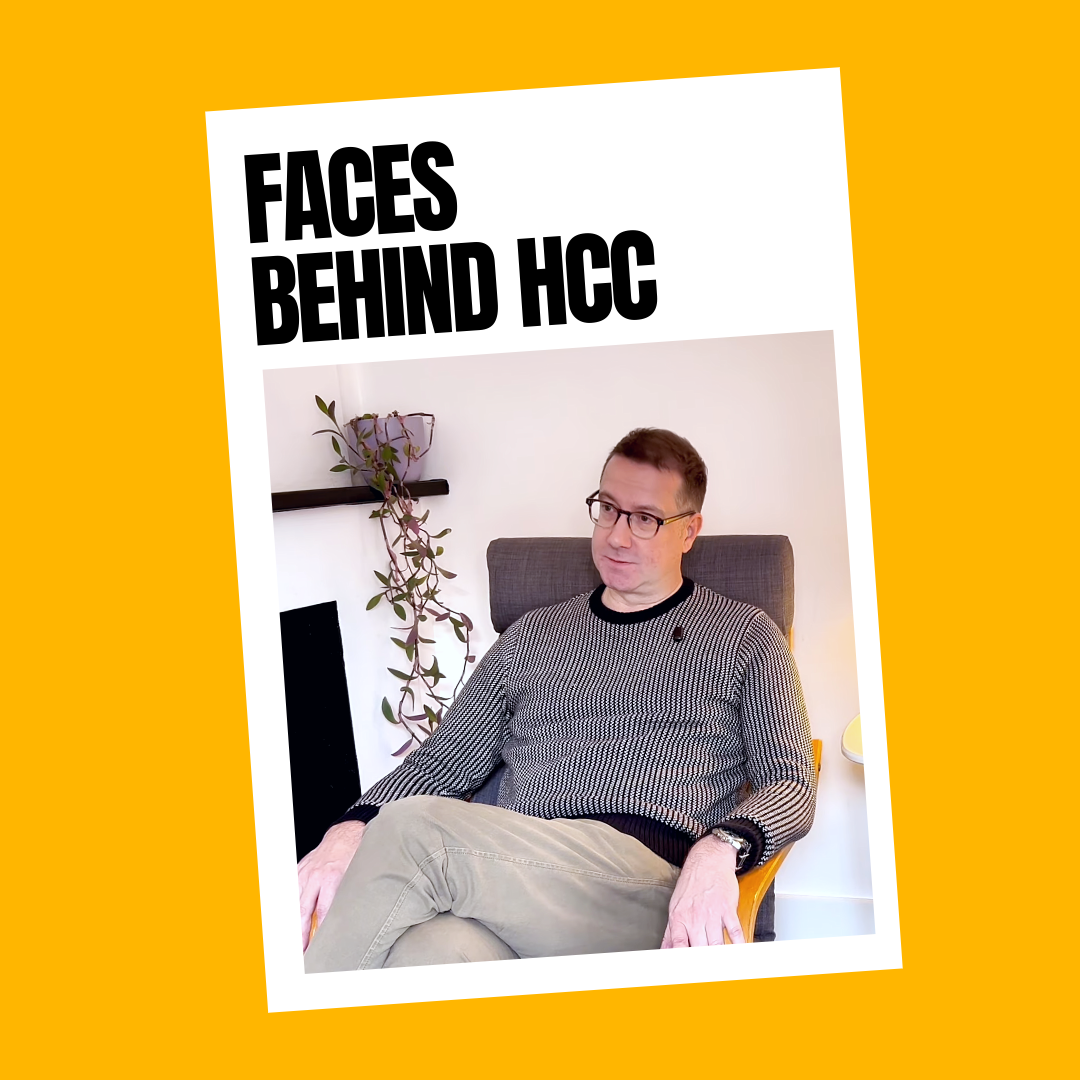
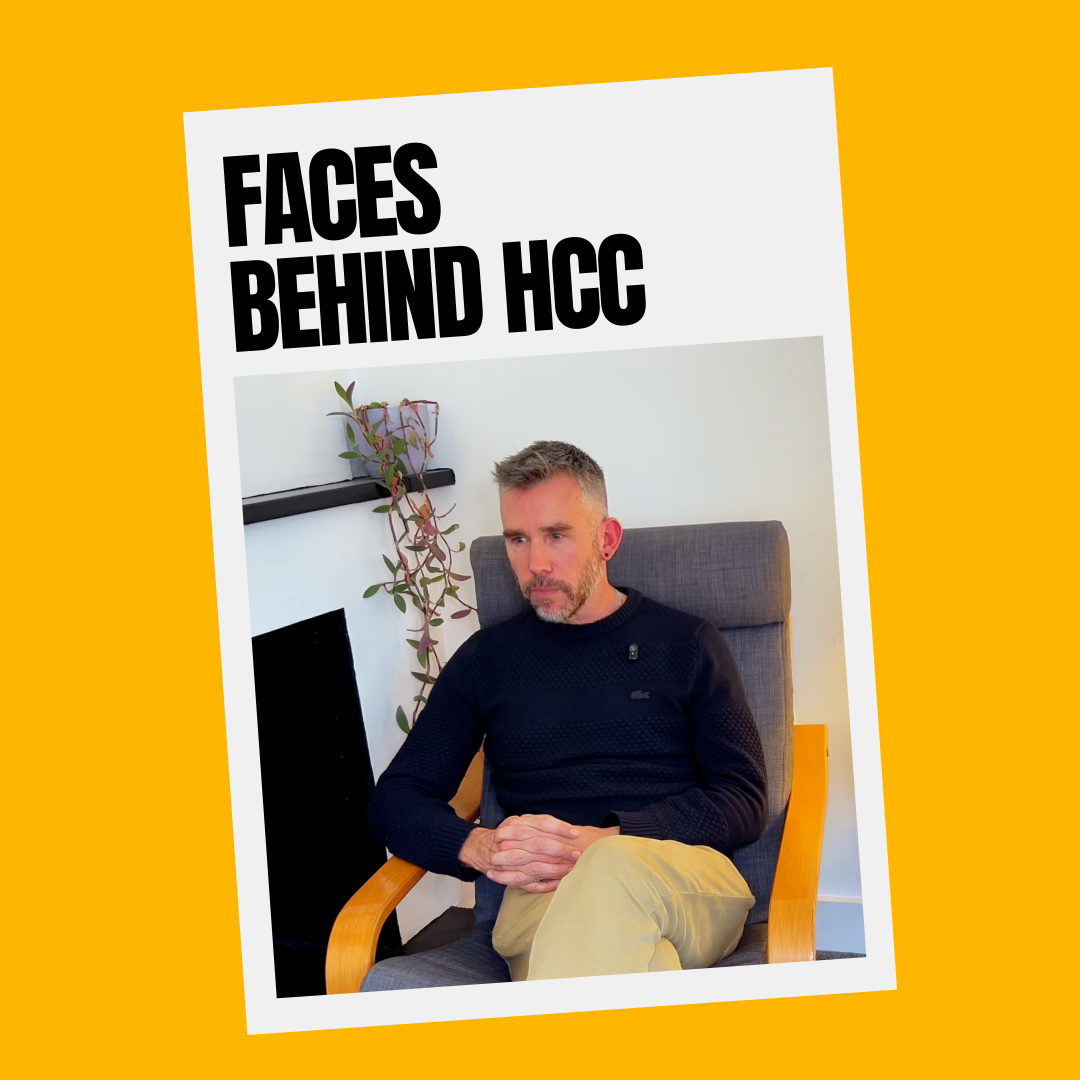
In Conversation with Darren Harvey

As part of our series of Faces Behind HCC, Diploma in Psychodynamic Counselling graduate Darren Harvey (MBACP registered) discusses his experience of training and working at Highgate Counselling Centre.

In this conversation, Darren reflects on psychodynamic training, career pathways after graduation, and the client experience at HCC.

00:00 Introduction and professional background
00:26 Choosing psychodynamic counselling and HCC
01:02 Training experience and learning environment at HCC
01:49 Career pathways after graduation
03:17 What clients can expect at HCC
04:28 Accessible counselling and contribution-based fees
05:10 The role of a staff counsellor at HCC

Watch video on YouTube: https://youtu.be/sJxv2vw1t4M

In conversation with Nick Cobill, Barrister and Chair of Trustees at HCC

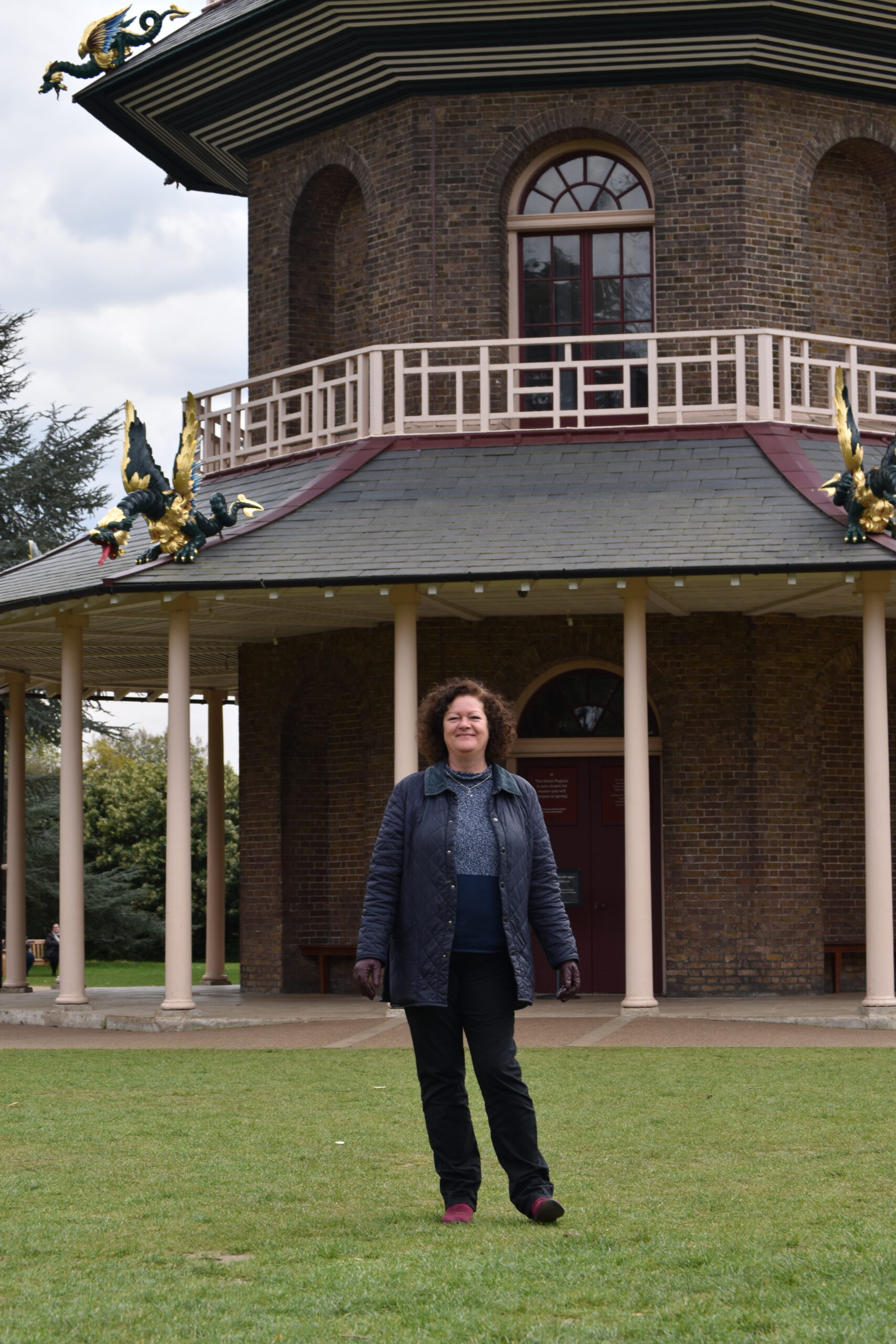
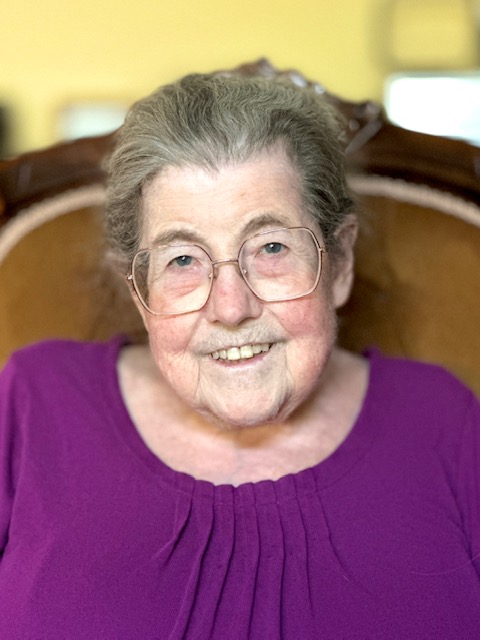
Photo of Nick Cobill, Barrister and Highgate Counselling Centre Chair of Trustees

Tell us about your background

My father was a soldier and met my mother when she was a refugee from the Turkish invasion of Cyprus in 1974. They got married twice in one week, in England and in the refugee camp in Cyprus, and a year or so later I was born in Plymouth. We moved to Highgate, and I attended nursery at the United Reform Church in the village, the primary school at St Michael’s, and later, Highgate School. Throughout that time my parents worked there. They ran the tuck shop and clothing store. My father also ran the Cadet Force and was a bursar, and my mother ran the Sixth form centre. My younger brother attended the school too, so happily I grew up surrounded by my family every day. When I reached the senior school, my housemaster was Steve Radford, who, some 20 years later, became my connection to HCC.

What is your recollection of Highgate in the 70’s and 80’s when you studied here and what is it like for you to live here now?

My main recollections of Highgate from that time are centred around the friends I grew up with. Over time, almost all of them left Highgate, and while the buildings have stayed more or less the same, the familiar faces of my friends are no longer here. My closest friend was laid to rest at St Michael’s Church. So, although Highgate looks like home to me, what really ‘feels’ like home is being around my old friends and family, the people who I knew when I was growing up here. We lived at the top of Dyne House, a neo-brutalist 60s block on Southwood Lane. It was and probably still is the highest point in London. Incredible views. To the north, I remember the blue lights of the fire engines climbing the hill to meet the fire at Alexandra Palace. To the south, I remember the golden ribbonof the river snaking through the Docklands and watching Canary Wharf rise slowly from the ground. I am happy living here. But I have been happy living everywhere I have lived.

Tell us about your professional background

After Highgate School, I went to University of Kent to study English and Philosophy. Later I studied law at Westminster and took my Bar exams at the Inns of Court School of Law. Throughout my working life, my time has been spent between London and Birmingham. I have friends and family in both cities, and Birmingham is one of my favourite places. I currently work as a barrister in No5 Chambers in London and specialise in commercial disputes. I represent airlines, banks, insurers and some household name businesses and individuals in disputes here and abroad. It has been an unusually busy year and some of my cases have the propensity to change industry practice. I was appointed as an Examiner of the High Court earlier this year, which involves me dealing with evidence in foreign proceedings and mesothelioma claims in our courts. Before becoming a barrister, I worked as a solicitor in an international law firm, and before that I worked in a bank in the City of London. Prior to that I worked as a security guard and an installation engineer, installing and testing window cleaning equipment at the top of office blocks. I was paid danger money for that. I have to say looking back I am quite grateful to have the job I have now.

What attracted you to becoming a trustee, and recently a chairman at HCC?

As I mentioned earlier, it was the connection with Steve Radford. Steve reached out to me when I returned to Highgate and invited me to become a trustee. I was viewing a flat and the letting agent handed me a slip of paper with Steve’s number on it and asked me to call it. Quite how Steve managed to track me down I still do not know.

We spoke and I said that I would not do it unless I could see a counselling session. Of course, that was not possible, but I was invited to a supervision session of HCC’s trainees. Until then I really did not appreciate that every time a counsellor goes into a session with their client, they put themselves ‘on the line’. As I listened to the discussion between the trainees and their supervisor, I could not identify the priorities of the session, yet there was a unity between the observations of the supervisor and the trainees – they were all able to pick up something significant from what appeared to me to be ‘throwaway comment’. And to intervene in a serious situation. My respect for them rocketed and I vowed to invest my time to support them. As a result, I accepted the offer to become a trustee and have enjoyed the role ever since, whether helping with the move from Tetherdown to Highgate or more recently, the appointment of Natasha as Centre director.

What, in your opinion, is the role of Chair in an organisation like HCC?

For me, it is ensuring that HCC stays true to its core principles by providing counselling to those who cannot afford it otherwise. It is also about ensuring the survival and development of HCC, in particular, in the key areas of: (1) counselling; (2) training; and (3) fundraising (currently in the nascent stage of development), which will support (1) and (2). As chair, and mindful that I am surrounded by excellent trustees, my role is also about harnessing their expertise and experience, as well as their networks, and working with Natasha to ensure that HCC flourishes and the board discharges fully its obligations.

I also think back to the graduation ceremony in summer, where I spoke about Steve’s time as a chair at HCC. I spoke about the time the Centre’s future was in jeopardy due to difficult financial circumstances and identified the ‘Churchill in the garden’ moment, when, despite the likelihood of closure, which seemed inevitable, Steve rallied the board to keep the Centre alive. Steve and Lindsey used to come to the Centre early in the morning to switch on the heating, to prepare it for counselling and training, and then come back at night to switch it off to save money. Over time, under Steve’s guidance, and with the appointment of Lois Elliott as Centre director, HCC’s fortunes turned around and we survived. Steve was also instrumental in HCC’s recruitment, helping to bring in more trustees to strengthen our position, as well as Natasha, our excellent Centre director.

I take the lessons from the past, I am grateful to my predecessor, and I am mindful that I have a duty to build on all the hard work to date, to ensure the Centre survives and flourishes.

What do you enjoy most about your role at HCC?

The sense of community here, which really comes to life at events such as the recent picnic in Cherry Tree Wood or the graduation ceremony. I love talking to people whom I have not spoken to before and hearing their experiences of HCC and their appreciation for the community we have here. And any ideas on how we can improve.

I am also lucky to work alongside people who are the best at what they do. Natasha, as Centre director, and Kevin, as Training Manager, are world-class – it is awe-inspiring to be able to work with them. And that also goes for everyone I have met within the organisation; everyone really wants to make a positive difference. Before Natasha’s return to the Centre last month, we also had the brilliant guidance of our administrators Kate, Sara, Joanna, and Diana, to name but a few, who stepped in to keep Natasha’s direction of travel for the Centre. And it is heartening to see how dynamic we have become, how quickly we can put into action ideas, such as Lucie’s, to set up our advertising board outside. I would like to see HCC’s well-deserved reputation reach further.

What do you enjoy last?

I struggle to answer this, and will need to come back to you when I find something. Seven years in, I still very much feel like I am in a honeymoon period at HCC.

How do you relax and practice self-care?

I believe that the most important commodity we have is time. For me, it is a question of maximising the use of time and not wasting it. It is about doing things that matter. I also believe that while having a routine is useful, it is also good to break out of your comfort zone, and so I am more likely to say ‘yes’ to things than ‘no’. I have to say, I tend to remain relaxed even when under pressure with deadlines. I suppose that comes with the work I do. I am very aware of how far I can push myself before I take a break. It is a lot further than you may think.


First published in our internal newsletter, 2024